An inflatable paddleboard is one of the easiest ways to get on the water, and one of the most portable. The Drift and the Estuary both pack into a wheeled bag and inflate in a few minutes. A simple routine makes the first outing calm rather than chaotic, and it is worth practising on land before you get to the water.
Pump it properly
Unroll the board on flat ground and start pumping with the valve closed and the gauge connected. The first few strokes are easy and they get harder as the pressure builds, which is normal. Inflate to the pressure printed on the board, usually around 15 psi. A board that looks firm but is under pressure will flex in the water and paddle badly, so take the extra minute to reach the number. Screw the valve cap on when you are done, and give the board a few minutes to settle before you launch.
Launch from a slipway
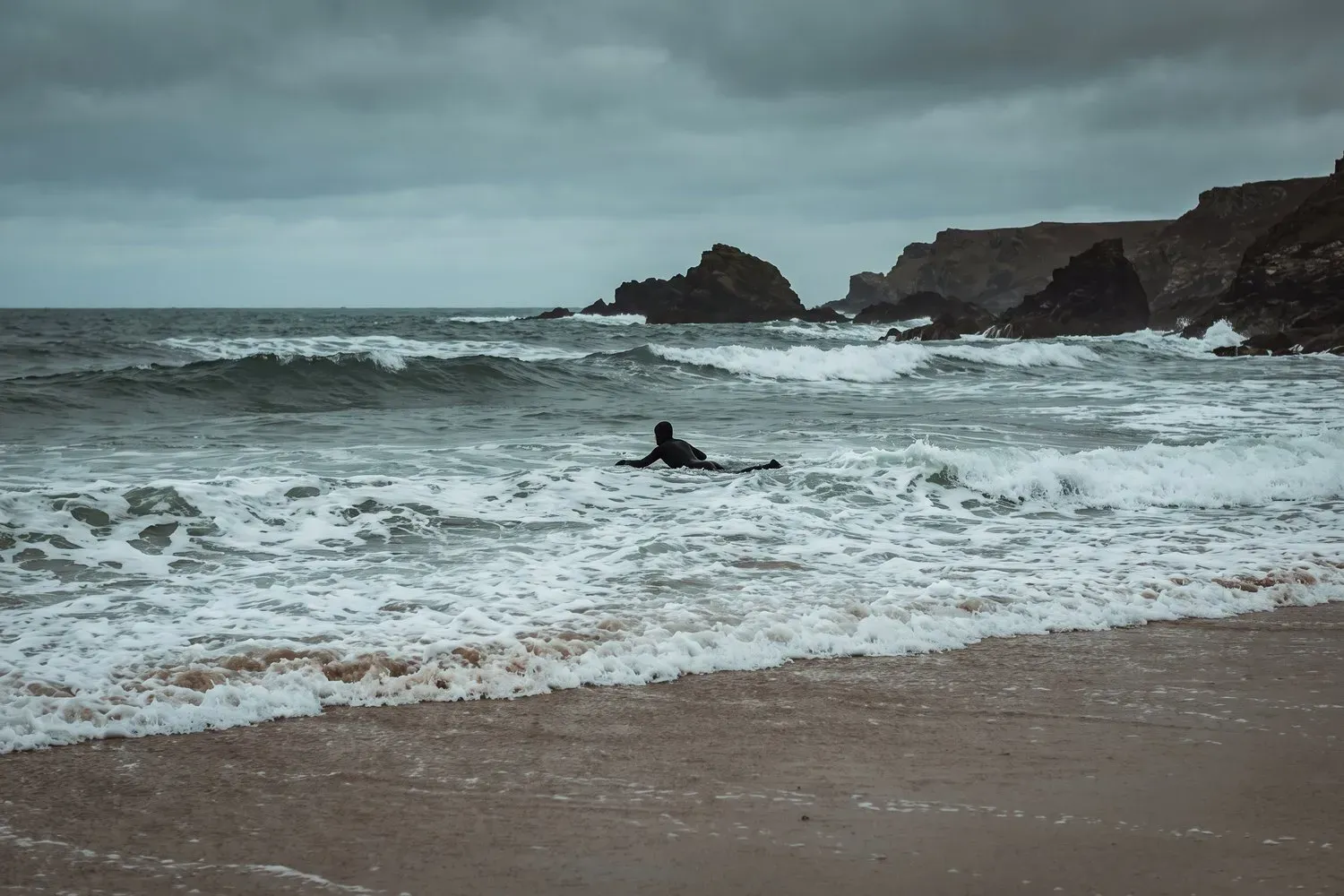
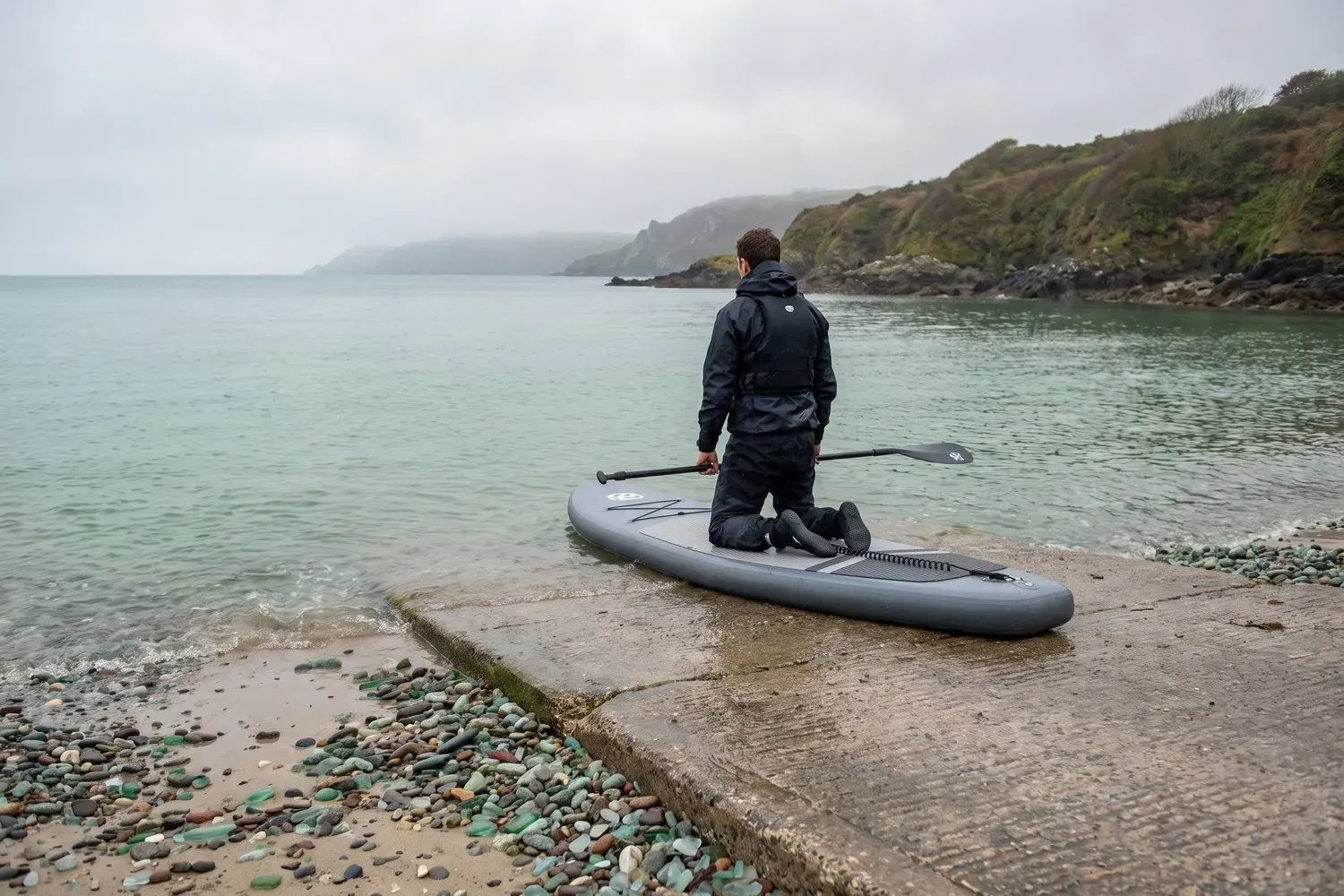
A slipway or a sheltered beach is the easiest launch. Carry or drag the board the short distance to the water, kneel on it while it is still shallow, and paddle out on your knees until you have room. Standing too early in the shorebreak is how most first swims happen. Keep the leash attached and the paddle held across the board when you are near others, so you do not catch anyone with it. Once you are up and moving, keep the board pointing into the wind, since it is far easier to paddle upwind than across it.
Paddle with your core
Stand with your feet either side of the centre handle, knees soft, and reach forward with the paddle rather than pulling with your arms. Use your torso, not your shoulders, and take steady strokes along the rail. Look at the horizon, not your feet, and you will stay balanced. The three-piece carbon paddle is light, which makes a real difference over a longer paddle. For a longer day out, the Estuary carries more and tracks straighter than the Drift, while the Drift is the friendlier board for calm bays and families.
Choose a calm, sheltered day to begin, and check the wind and tide before you launch. Wear a leash and a buoyancy aid on the sea, and paddle within your ability, near a lifeguarded beach where you can. If the wind picks up offshore, come back to shore early rather than fighting it out and back. A short first outing is a good first outing, and you can build up to longer trips as your balance improves. Take a phone in a dry bag, and let someone know where you are going and when you expect to be back.
A quick checklist
- Unroll on flat ground and inflate to the printed pressure.
- Close the valve and screw the cap on.
- Launch from a slipway or a sheltered beach.
- Kneel until you are clear of the shorebreak.
- Stand centred, knees soft, paddle with your core.
- Check wind and tide, wear a leash, and start somewhere sheltered.
- Paddle within your ability near a lifeguarded beach when you can.